Freelance Developers – £15 an hour

Really? In England? Somebody would only charge £15/an hour for development?

Well, that’s what the ad said…

Whilst browsing YouTube recently a number of MPUs have been displayed on the right hand side of the YouTube site: One that keeps cropping up is from a business that has recently stepped up a gear in promoting itself over a period of months.

I initially noticed the business’s PR team throwing content at publishers. As with a lot of PR I see on my desk these days, some of the associations between the business embedding their link in the PR piece and the content itself is a little spurious.

Secondly the rate at which these pieces of PR are being pumped out is, in my opinion at a relatively small scale publisher, flooding the market. To publish content from the same source on a regular basis, with sometimes tentative associations with the content, and all-of-a-sudden when there was nothing before is a little bit, well… Spammy!

But when their display ads appeared pushing devs for £15 an hour, VAs for £10 an hour and the same measly rate for freelance animators, it concerned me a bit. There is a “going rate” for web designers & web developers and, even though I personally operate a little under that rate, I wouldn’t stoop so low as to offer my specialist services, which I have spent over a decade developing, for a rate not much better than the national minimum wage.

So I took a look at their website. Lo and behold, the developers are not even in the UK. The lowest c0st, home grown developers are offering their services at a little under the “going rate” which is fine by me.

If you are looking for a developer for £15 an hour then the chances are they won’t be in the UK. You may well get a good service but if you do want to keep your money at home and spend it locally then a Brit will be worth twice that amount.

As for a Brit offering your services at such a low rate, well it’s up to you if you think you can pay for all your kit, your learning, your office and your travel, mortgage etc on a such a small amount – Don’t forget that as a freelancer you may not be able to get work all the time (especially if businesses are sending work abroad) so work out how much “downtime” costs you.

Personally, I shall be sticking with the industry standard.

Email UX Fail

I just got a call from a PR agency asking if I’d received their email. There’s nothing new about this as I get calls all the time chasing up if I want to publish a story.

This particular PR agency refers to the mail they sent me on Monday. I know the PR girl’s name and scan my inbox but she quickly notifies me that it’s not in her name but a generic name. There it is, it’s from… News.

I open the email. There’s nothing there. I’m running MS Outlook Web Access and the image is blocked. I tell the rep this. She responds with…

“All that beautiful design and the content’s blocked!”

Exactly.

There is nothing, absolutely nothing to help me out as a reader. The subject line says…

“An invitation from…”

And the tool tip says…

“An exclusive provate evening”

I have to unbl0ck the content to read the email. And yes, it is a beautifully designed email, a very nice image including embedded text.

I may not be able to attend the invitation so I forward it to a colleague. They receive the email but not the image.

The only way I can get it to them is to save the image locally and write a new email attaching the image from my local drive.

In so many ways this email is a complete fail.

As a designer and an email marketer I’d recommend the following  solutions:

  1. Ensure the email is from a person, a name, not just the generic title “News” – As an editor I receive hundreds of emails from senders called “news” and I’m less likely to look at generic sender emails.
  2. Maybe the subject line could have detailed the invitation? Maybe an invitation to a book launch or an evening with a top publisher? Maybe.
  3. How about the alt text of the image is a little bit more descriptive? ”An exclusive provate evening” just doesn’t do it for me – I am still none the wiser as to what this is and what if the email recipient doesn’t hover their mouse over the image for long enough to see the alt text?
  4. In addition to point 3, it’s good practice to include the title attribute in an img tag as some browsers/readers will only display the alt or the description or vise versa.
  5. What about a “text alternative” email version? Qmailer allows you to send an HTML version backed up by a text version so the open rate will be higher.
  6. How about include a link to an HTML version of the email. These usually go along the lines of  ”If you’re having difficulty reading this email click here for an online version”.*
I’ve refrained from posting any details of the email as I don’t like to name drop in situations like this, but there’s an opportunity there to help these people run a more effective email campaign next time, if they just followed a few common sense guidelines.

*As an aside to point 6 I used to keep versions of all my email newsletters online until an ex-employee called one day asking about the HTML I’d written for these newsletters. He’d taken one of my HTML newsletter templates and started using it for the new company he worked for and was having problems getting it to work for him (The HTML was very simple, BTW). It would have been courteous if he’d asked politely if he could use the HTML and I would probably have said yes, but it was just a little shocking that he was stupid enough to say that he’d already taken the HTML and was using it!

Takers

We’re a generous lot in the web industry. We studied computing and design, put the subjects together and became web designers and developers and SEOs and marketers and all other many of web professions.

Hanging around online for over a decade we passed on some of our knowledge, taking time to craft articulate answers, taking people out for beers, taking our own valuable time to explain and assist and unselfishly help others to grow.

We gave people jobs, we taught them a few more things, we gave them trust and time and flexibility, we even wrote nice references for them even when they weren’t really that good.

And yet, when those people took our beer and our time and our knowledge and our patience, what do we get?

Nothing.

Not even a sincere little thank you.

We don’t begrudge them taking on some of our skills for nothing and then selling themselves on the back of our graft, not too much anyway. What we do find offensive is the inflating of their own egos and taking credit for more than they deserve. Saying our websites were all their work, doing 1% of what it requires to be an SEO and then selling themselves as SEOs. Stealing the content from other people’s websites and passing it off as their own.

Those are the signs of the people in life who take and do not give back. They are so incredibly selfish, these takers.

We’re still happy to share, I’m sure we always will be, but it’s those takers who damage the trust that we so unconditionally give. And when we see our gifts used and abused we feel a little sad, but we hope that there are better recipients out there who will use the tools wisely.

We believe in karma in the web industry. What goes around comes around, so whilst our generosity will be rewarded so will the selfishness of the takers too. Their “success” will be minor and short-lived. Our success are far sweeter. Whilst they’ve stolen to “achieve” we were there, we were actually there, we saw it, we done and we got the shirt. The takers in life just brought the shirt (and it was a cheap imitation too)

So if you know any takers, be wary of them – They will take as much as they can and take all the credit. But ultimately they will be found out. And be thankful that you never gave away the deepest secrets of the art because they really are not deserving of such knowledge, best keep that for the real pros.

</SermonOver>

Unified Design

{EAV_BLOG_VER:d89dde15afa9a96f}
I remember my first big gig in 2001 – the client had a website with a white background, blue text and red links. It wasn’t particularly good.

I offered to redesign the site and, after some initial reluctance, they allowed me to make the improvements.

It worked. The site, with a few tweaks here and there over the course of time, was successful in the eyes of users and the company and was a stable design for about 5/6 years. The “line skips”, gradients and rounded corners were ahead of their time in an age of very square websites.

In 2006 the site was moved from horrendously-cumbersome static HTML to a Content Management System (CMS) and I pretty much ported the whole design across to Joomla 1.0

By 2009 I was getting rusty being more into copy writing, content management and SEO and it seemed that the design world was passing me by – I admitted defeat, handing the Joomla 1.5 design duties to a seasoned veteran. Based upon design elements of very successful websites such as The Times and the BBC, the new design was a packed, busy and fairly understated affair.

In 2011 the site was again becoming dated. The Times was now behind a paywall and the BBC had undergone two more redesigns.

I spoke with the client saying that I had some doubts about the current design but that I also had some ideas that might help improve the visuals of the site but that they would take time. At a small company where everything else takes priority over the visuals, time for design takes a back seat and time is the very thing you need in order to design effectively.

Without the luxury of time or a budget I made a small change to the design of the live site – If it was successful I would roll it out to other parts of their template – It was a subtle enough difference that, once fully executed, would make a positive impact on one aspect of the design without massively affecting the whole aesthetic.

The client hadn’t noticed the change until I pointed it out whilst, incidentally, pointing out another design issue caused by a coding quirk.

They didn’t see the benefits of the change that I had deliberately engineered but was really keen to implement the result of the random quirk.

A discussion ensued as to how it would be great to roll out the results of the random change whilst ignoring other elements of the design of which many were not even realised let alone implemented.

And it is this very factor that I find a little disturbing…

There are more than 1000 lines of CSS code in the website’s primary stylesheet. If you run the Dust Me add-on in Firefox (I know Fx 6 is out but it’s certainly compatible with my Fx 3.6.18) then it shows 799 unused and 179 used selectors across 3 stylesheets.

I look at the site now; my eyes alone see a header, menu systems, menu headings, menu buttons, a breadcrumb trail, a main page, right-hand-side information boxouts, ads, social media buttons, inset images, headings, subheadings, paragraphs, footnotes, footer menus, sitemaps, horizontal rules, quotation marks, fonts, font weight, leading, margins, padding, gutters, white space…

My point is that there are many elements in the design of a webpage. By tweaking one design element it does not give full reign to individually tweak other elements on a piece-by-piece basis.

Looking at features in isolation is short-sighted. I’m a firm believer in a holistic approach, I’ve read and understood and appreciated systems theory, I have had a natural affinity for being artistic and I studied graphics & design and art, gaining top grades and distinctions along the way. I am not the best artist or designer in the world by a long shot and I sincerely value the input and insight of others who contribute to my world from their different viewpoints. But I do think this…

Design should be unified.

The short-cuts taken at an early stage can lead to even more work to tidy up the mess at a later date, I know because I’ve seen it, experienced it and had to waste time backtracking in my 13 years of experience of design. There’s nothing worse than making 10 individual changes only for them not to work in unison and then to have to redo them all in one go at a later date – that doubles the amount of work and, whilst more work is always good, it’s only professional to inform the client of best practice rather than simply take their money.

As an example: I love the colour red, I have many cheery and powerful red t-shirts. I love the blue of the clear summer sky it lifts my spirits. Green beneath my feet reminds me of my proximity to my leafy garden and the nearby forest. Alone, I love each of these colours, but I would think twice before painting my ceiling sky blue, my walls red and have green carpets.

Next time someone asks can we “just” change this or “just” tweak that – be honest and acknowledge the obvious, immediate and short-term benefits of doing so but also remind the asker that it is one of just many things that can all affect each other. Point out the other elements and the other ideas and, whilst you’re at stage 1 and they believe their upgrade is simply and immediately “better”, that there are so many other options and possibilities that need to be explored. It takes a little time.

Bullish clients will often try to “overcome objections” and bulldoze you into making the changes. Design is a considered process, do not be rushed.

Remember…

Good design begins with honesty, asks tough questions, comes from collaboration and from trusting your intuition.

Freeman Thomas – Automobile Designer

SEO – It’s Not Rocket Science. Is It?

{EAV_BLOG_VER:1d359c785794eeba}
It's not rocket science but it isA couple of years ago at Joomla Day UK I fronted an impromptu Q&A session on SEO at the behest of my friend and fellow web designer Arno Zijlstra (and all at 2 minutes notice!) It was a real on-the-spot discussion answering some pretty rudimentary questions about best practice in SEO to a crowd of Joomla CMS users. Whilst I am in no way (nor do I ever aspire to be) an Aaron Wall, Rand Fishkin or Jeremy Shoemaker in the SEO world, I’ve always believed it’s a practical benefit for any serious (and interested) web professional to be clued-up on SEO techniques and so I attempted to impart some of my decade’s worth of practical working SEO knowledge to the audience.

One of the crowd said:

SEO isn’t exactly rocket science, is it?

Which is a valid point. SEO isn’t rocket science; I’ll readily admit that Search Engine Optimisation techniques require no mastery in any of the fields of:

mechanics (fluid mechanics, structural mechanics, orbital mechanics), flight dynamics, physics, mathematics, control engineering, materials science, aeroelasticity, avionics, reliability engineering, noise control and flight testing.

So, as you can see, SEO isn’t rocket science.

All you have to do to be good at SEO is (try to) understand the workings of the search engines, understand the code that goes into your website, the structure of the website, the information architecture, the paths, the URLs, know your way around the statistical package(s), spend time analysing the search terms that you are found for and want to be found for, find better terms, more popular terms, competitive terms and even the less competitive terms and have as intimate as you can an understanding of the goings-on in the world of search. For instance, if you know about Google’s “Panda update” have you heard that it may be a rolling issue with the latest incarnation being dubbed Panda 2.3?

You need to know how to spell, you should know your language, be able to write well, have good grammar, good vocabulary and a pool of alternative and complementary (synonymous) terms and words to draw from, you should also know how to do mod_rewrite, .htaccess, monitor your server’s error logs and when to use a 301 or a 302 and when to use a 410.

If you want to be good at SEO it helps that you get some time behind you, and get some real experience of SEO. So remember the 10,000 hour rule from Malcolm Gladwell’s Outliers; it takes 10,000 hours to be an expert at a subject which equates to 40 hours a day every week for 5 years. 10 minutes a day of cut-and-pasted body text into title and meta tags over the last couple of years with a Frankenstein-inspired boilerplate on your website, stolen from other practitioners’ websites will not cut it – especially when other SEO pros have sussed you out in less than 30 seconds.

Back in 1996, as a mature student, my Typography tutor said to me:

A love letters is the beginning of typographic wisdom.

In the same vein I would say that:

A love of words is the beginning of SEO wisdom.

As Craig Killick of The Escape said to me in a conversation on twitter once:

There are no secrets in SEO anymore

That’s true too, the mystique has gone from SEO much in the same way that there are no web design secrets anymore. (Nearly) Every tip, trick and technique is out there on the web (somewhere) and has been for quite a few years now. What is important is your ability to learn, to soak it all up and, more importantly, to put it all into practice and to get some tangible results.

So, SEO isn’t rocket science. But it is…

KBW – Kitchen & Bathroom Warehouse

{EAV_BLOG_VER:d89dde15afa9a96f}KBW WarehouseWe’re pleased to announce we’re working on the SEO and marketing of the KBW the Kitchen and Bathroom Warehouse website.

KBW Warehouse has just recently launched and is dedicated to supplying kitchen and bathroom fittings – everything from taps & mixers to power showers and shower pumps.

Along with Andij who are handling the design and ecommerce, we’ll be actively promoting the site via a number of channels so watch out for news and updates.

Built on the Magento ecommerce platform, this only our second venture into the world of electronic commerce websites, the first being Online Lures the sea fishing tackle specialists. Having been raised on Joomla! and WordPress we’re really impressed by the Magento platform and will certainly be considering it as an option in our offerings on the not too distant future.

But in the meantime, if you need anything for your bathroom or kitchen, everything including the kitchen sink can be found at KBW Warehouse.


Essential WordPress Plugins

[NB: This post is a work in progress]

Our favourite blog platforms has to be WordPress. We’re regularly building new blogs and mini websites based on WordPress and, despite it being a regular habit, we often forget our own complete list of plugins!

So for your benefit as much as ours, here’s our list of essential WordPress plugins:

WordPress Database Backup = WP-DB-Backup

This plugin is absolutely essential for backing up your WordPress database. WP-DB-Backup will backup your complete database meaning content, comments (minus spam, if you choose the option), structure etc. So, as long as you have local backups of your WordPress installation with templates, you can have your installations complete contents backed up on a regular basis – to your computer, to the web server or emailed to an email account hourly, daily or weekly!

Look up wp-db-backup in the WordPress backend installer, go to the WP-DB-Backup  page at WordPress plugins or visit the author Austin Matzko’s WP DB Backup page.

And don’t forget to make a donation to Austin if you like and use his script – for the price of a café latté to give you peace of mind that your WP DB is being backed up regularly, that’s well worth your time and money, so make sure it’s worth his too!

WordPress Spam = Akismet

Make sure you’ve got Akismet installed, it is the de-facto plugin for eliminating WordPress spam. Get an API key, install Akismet and then watch it mop up spam.

Akismet is free for personal use but is exceptionally cheap for commercial blogs, starting at $5.00/month for professional single site access.

Get Akismet at the WordPress Plugin Directory or take a look at the Akismet website.

Kieran Doherty Talk

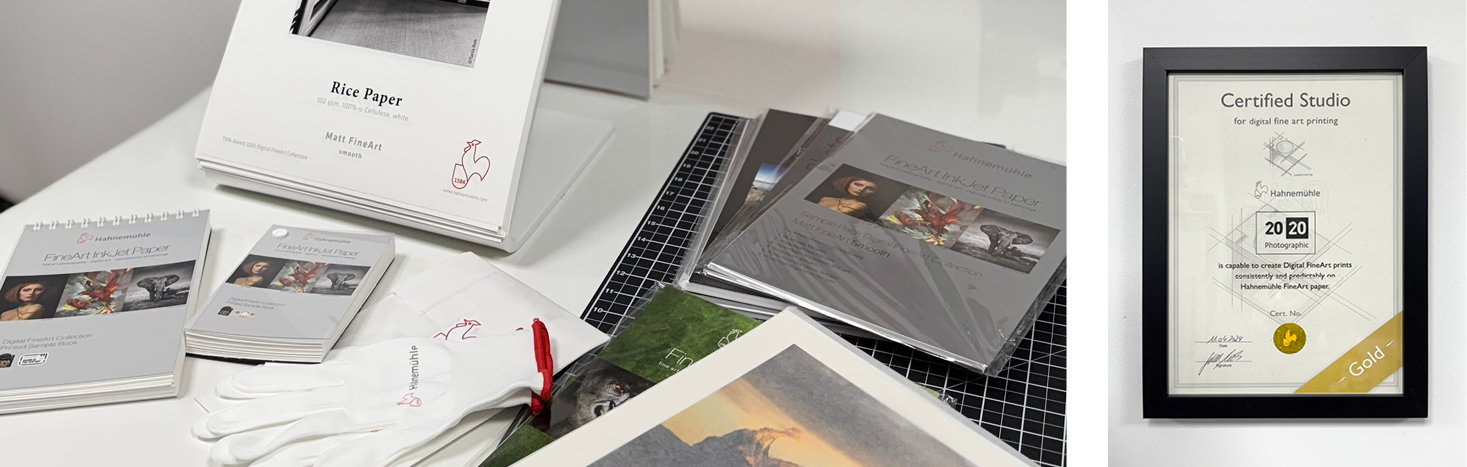
Our friends over at 2020 Photographic are hosting a special evening with the winner of News Photograph of the Year 2010, Kieran Doherty.

The talk will take place on the 3rd & 4th November 2010 at 2020′s studio in Farnborough between 7:30pm and 9:30pm.

Kieran will be presenting an overview of his career so far, talking about his experiences photographing the Asian tsunami and his time in Iraq. From what we’ve heard from 2020 Kieran has some amazing stories to tell.

The slide show will feature Kieran’s award-winning and published work, followed by a Q&A session where you quiz him on his work.

The cost of the talk is £25 and includes refreshments.

If you want to see Kieran’s amazing work and hear the story behind every picture then call 2020 Photographic on 01252 375708 to secure your place.

For more of his work, see the website of Kieran Doherty.

Web Tools

I thought I’d start bookmarking the tools I use on the web in a place that’s easy for me to remember and easy to share with the readers. So here, in no particular order, are the tools I use. Bookmark this page and come back to see it evolve.

Content Management Systems

  • Joomla! – Probably the world’s most popular CMS.
  • WordPress – Whilst most commonly regarded as a blogging platform WordPress is my weapon of choice for small scale websites.

CSS Tools

  • Dust-Me – A Firefox extension from Sitepoint that, when run, checks for redundant CSS selectors, allowing you to clean up your stylesheets. Particularly handy for large, inherited and legacy websites.
  • CSS Optimiser – Compress (and decompress) stylesheets with this tool and keep your CSS file sizes down.

Free Images

  • SXC.hu – Need an image quick and free?

FTP Tools

  • Filezilla FTP – Often Dreamweaver’s built-in FTP client will let you down, so always have your FTP sites set up in Filezilla as a backup.

Link Checking Tools

  • Xenu Link Sleuth – If you put your mind to it, this link checking tool can be put to a number of beneficial uses. Go play.

HTML Tools

  • Tidy Online – Need to quickly tidy that HTML/XHTML output? Run it through the highly-configurable Infohound HTML Tidy.

SEO Tools

  • Backlink Tracker – Track keyword ranking, backlinks and PageRank.
  • Google AdWords Keywords Tool – Always handy for keyword/keyphrase research plus allows you to suss out your own KEIs from popularity vs search volume.
  • Keyword Density Analyser – If you still believe in keyword density and prominence then Ranks.nl’s tool is a must.

We Are Ten!

22i Design is 1022i Design is ten years old!

The date passed me by as it’s been so incredibly busy recently but 22i Design, Farnborough’s very own little hosting, web design and SEO business, is ten years old!

22i Design was quietly rolled out on the 5th September 2000 and has stayed pretty low-key ever since (Deliberately so)

We’ve gone from merely designing websites for small businesses to hosting, logo design, photography, copy writing and a lot of SEO.

So here’s to 22i Design and another 10 more years – Will the business stay small or are there opportunities to make this a bigger company? Only time will tell…